
Are you still experiencing splice errors or high loss readings even after replacing the electrodes on your fusion splicer? You’re not alone. While many field technicians assume that electrode replacement will fix poor fiber optic splicing, the truth is—this is just the beginning. In this expert guide, we’ll dive into the real reasons your fiber splicer may still fail and provide practical fusion splicer troubleshooting tips that work across all models—whether you’re using a core alignment splicer, ribbon fusion splicer, or a portable handheld splicing machine.
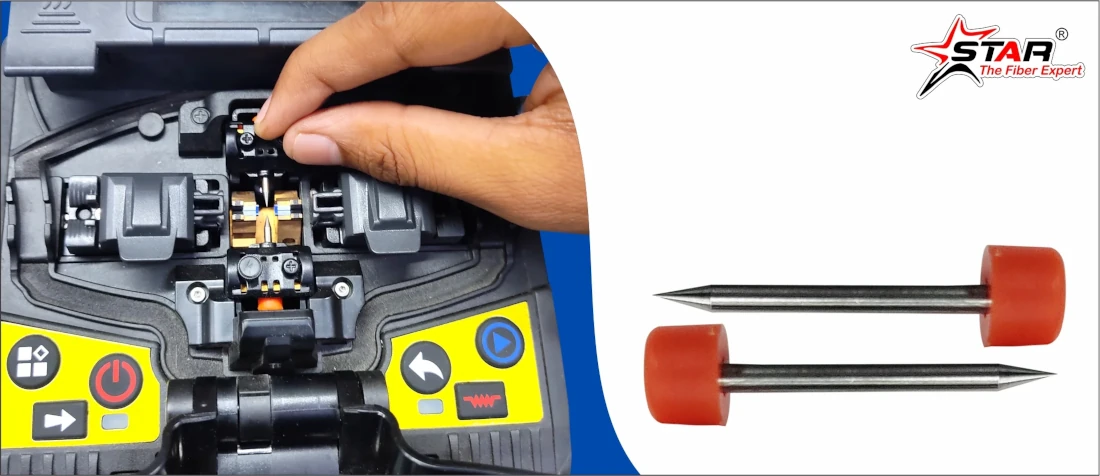
Why Electrode Replacement is Essential—and Not Optional
Electrodes are the core component of every fiber optic fusion splicer. Over time, they degrade and lose their efficiency due to repeated arc discharges. For optimal performance, replace electrodes every 1,000–2,000 splices. Timely electrode replacement is non-negotiable for any technician serious about maintaining high-performance splicing machines.
- Poor splice quality and high splice loss.
- Increased rework and field downtime.
- Signal attenuation and network instability.
- Long-term damage to your splicing equipment.
Common Issues After Electrode Replacement — And Their Real Causes
1. Improper Arc Calibration: When new electrodes are installed, the arc discharge behavior changes. The splicer must recalibrate arc power, duration, and angle to ensure optimal heat delivery for the fiber type and environmental conditions.
- Incomplete fusions resulting in weak mechanical strength.
- Air bubbles forming in the splice zone.
- Core misalignment, leading to high optical splice loss.
- Inconsistent fusion results across splices.
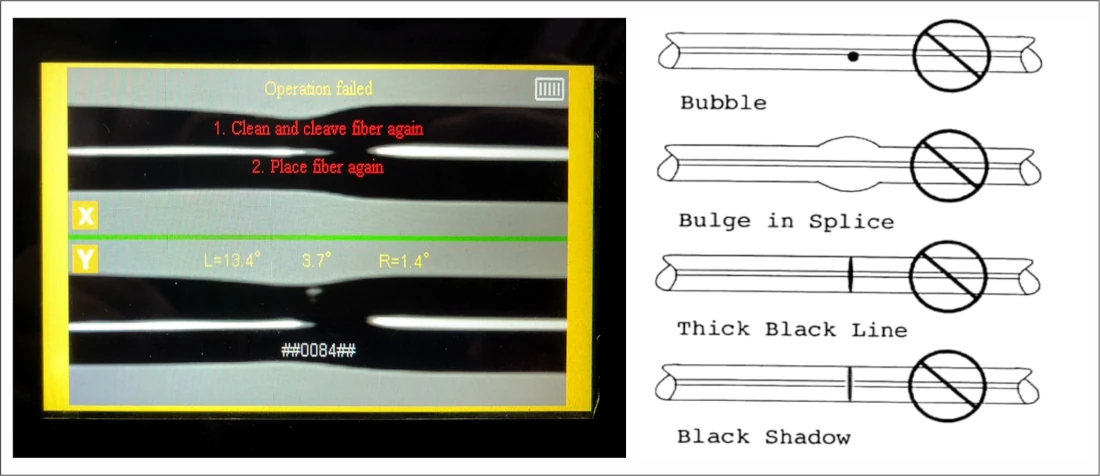
2. Dirty or Contaminated V-Grooves: V-grooves are precision-engineered channels that hold the fiber in an exact position during splicing. Even microscopic dust, oil, or residue from alcohol can disrupt fiber seating, causing core mismatch.
- Fibers do not align properly, leading to fusion errors
- Fiber ends shift or slip out during splicing
- Frequent “fiber misalignment” or “splice failed” error messages
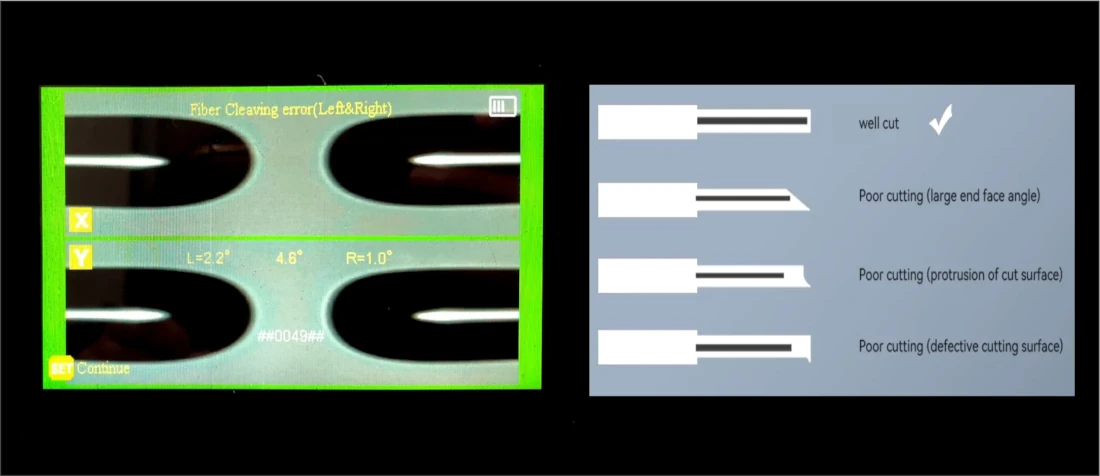
3. Incorrect Fiber Cleaving: A perfect fusion splice begins with an ideal cleave. If the fiber ends are not clean, flat, and perpendicular, the arc energy will not be distributed evenly, leading to improper fusion.
- Chipped, angled, or cracked fiber ends.
- High splice loss (above acceptable dB thresholds).
- Fiber breakage during fusion or tensile testing.
- Frequent “bad cleave angle” alerts from the splicer.
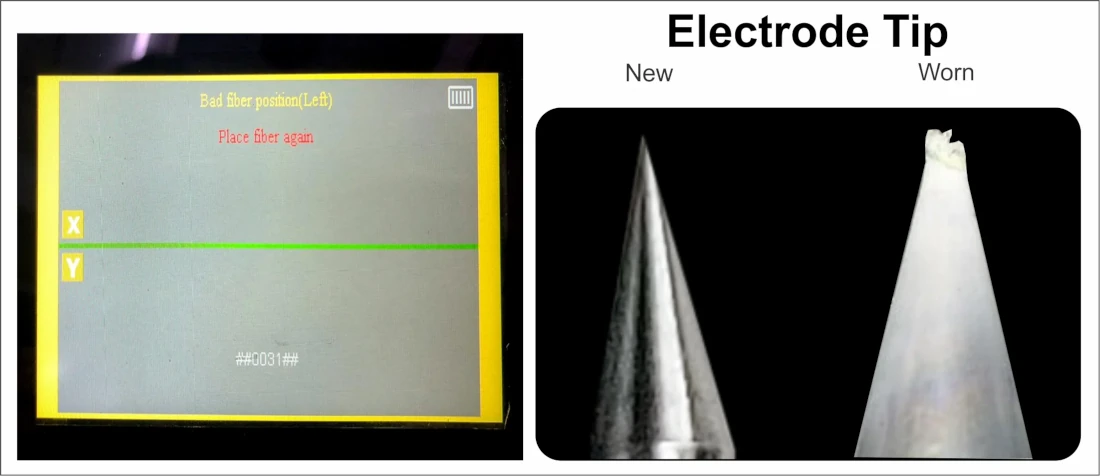
4. Worn or Contaminated Fiber Holders: Fiber holders are responsible for holding the fiber at the correct tension and position. Over time, they can get dirty, lose grip strength, or wear out, resulting in fiber misplacement or slippage during fusion.
- Misaligned fiber cores.
- Micro bending or stress points on the fiber.
- Inconsistent splice quality or higher loss on one side.
- Difficulty in fiber loading and retention.
5. Incorrect Splice Mode or Fiber Settings: Each fiber type (e.g., single-mode, multi-mode, NZDS, ribbon fiber) requires a specific splicing mode. Selecting the wrong mode alters arc discharge characteristics and fusion timing, resulting in sub-optimal splicing.
- Arc instability or overheating.
- Misjudged loss estimation.
- Physical damage to fiber cladding or core.
- High optical loss after testing.
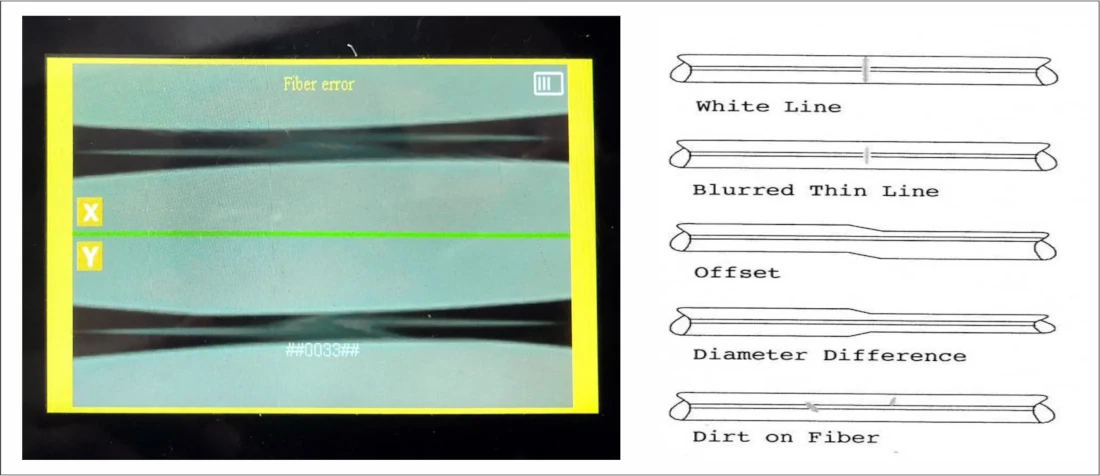
6. Outdated Splicer Firmware: Many technicians overlook the importance of keeping splicer software updated. Firmware controls arc discharge algorithms, image processing, loss estimation, and more.
- Arc discharge logic.
- Image processing algorithms.
- Loss estimation and alignment detection.
Smart Electrode Management with Star Splicing Machines
When choosing a fiber optic fusion splicer, it’s important to look beyond just splice time or alignment type. Features like arc calibration, electrode management, and after-sales support directly impact performance, uptime, and field efficiency.
✅Easy Arc Calibration: STAR FFS-9000, Fujikura 60S+, Sumitomo T-400s INNO 6L And Signal fire —offer automatic arc calibration. This ensures optimal heat adjustment based on fiber type and environmental conditions, improving splice quality and reducing manual effort.
✅ Intelligent Electrode Life Monitoring: The STAR FFS-7000 features a real-time sensor-based electrode monitoring system that tracks arc performance and alerts technicians exactly when to replace electrodes. It offers a perfect balance of accuracy and simplicity. While some brands like Sumitomo use AI-based systems and others rely on basic arc counters.
✅ Tool-Free Electrode Replacement: STAR, Sumitomo, and INNO support tool-free electrode changes, while some Fujikura models require tools. STAR Ribbon Splicer quick-swap design saves time in the field and ensures easy, efficient maintenance.
✅ Technician-Friendly Troubleshooting: The STAR FFS-5000 Ultima Fusion Splicer features built-in auto error detection with on-screen guidance, making it easy for technicians to identify and resolve splicing issues quickly—no manual intervention required. Designed for real-world field use, it simplifies maintenance and reduces downtime.
✅ Premium-Grade Tungsten Electrodes
- Longer arc life.
- Cleaner discharge.
- Reduced residue buildup.
- Fewer replacements and less downtime.
✅ Dust-Resistant Design – Built for Indian Conditions: Dust, heat, and humidity are everyday challenges for fiber technicians across India. The STAR FFS 9000 is engineered with a sealed housing and optimized airflow system to resist dust buildup and ensure stable performance, even in rugged outdoor environments like tower tops, roadside trenches, and construction zones.
At Star Infomatic, we don’t just manufacture splicing machines—we also service and support brands like Fujikura, Sumitomo, and INNO, giving us deep insight into what field conditions demand. That’s why STAR splicers are designed to meet real-world needs—reliably, efficiently, and with minimal maintenance.
✅ Pan-India Spare Support: Get fast, hassle-free access to genuine STAR splicing machine spares and electrodes across India. With ready stock, same-day dispatch, and express delivery, we ensure minimal downtime and maximum field efficiency.
✅ Technician Training & Support: Star provides comprehensive fusion splicer training and support to help technicians excel in the field. Through on-site workshops, step-by-step video tutorials, and 24/7 online helpline access, we ensure users are fully equipped to handle.
- Electrode replacement procedures.
- Arc calibration techniques.
- Fiber splice optimization and troubleshooting.
Expert Tips from Star Engineers
Replacing electrodes is just one step in achieving flawless fiber optic splices. With STAR fusion splicing machines, you’re not just replacing electrodes—you’re activating an entire intelligent system built to protect performance, maximize splice quality, and extend the life of your machine. Whether you’re a field technician, telecom contractor, or FTTx integrator, STAR’s Smart Electrode Management System gives you the control, precision, and reliability needed to deliver flawless splices in every environment.

 Request Call Back
 WhatsApp us